Fresh vs Frozen Bread: What Actually Matters for Restaurants and Hotels

Fresh vs frozen bread sounds like a marketing distinction, but for restaurants and hotels it changes something real: crumb structure, shelf life at the point of service, and how a bread basket or burger bun actually performs in front of a guest. "Fresh" and "frozen" get used loosely in B2B bakery supply conversations, and understanding the difference precisely is worth doing if you're responsible for an F&B programme — because the production model behind the word "fresh" matters more than the word itself. If you're still choosing a supplier, our guide to picking a bulk bread supplier in Gurgaon covers the broader checklist.
Three Different Things Get Called "Fresh"
There are effectively three production models on the market, and suppliers aren't always precise about which one they're using.
Same-day baked from raw dough
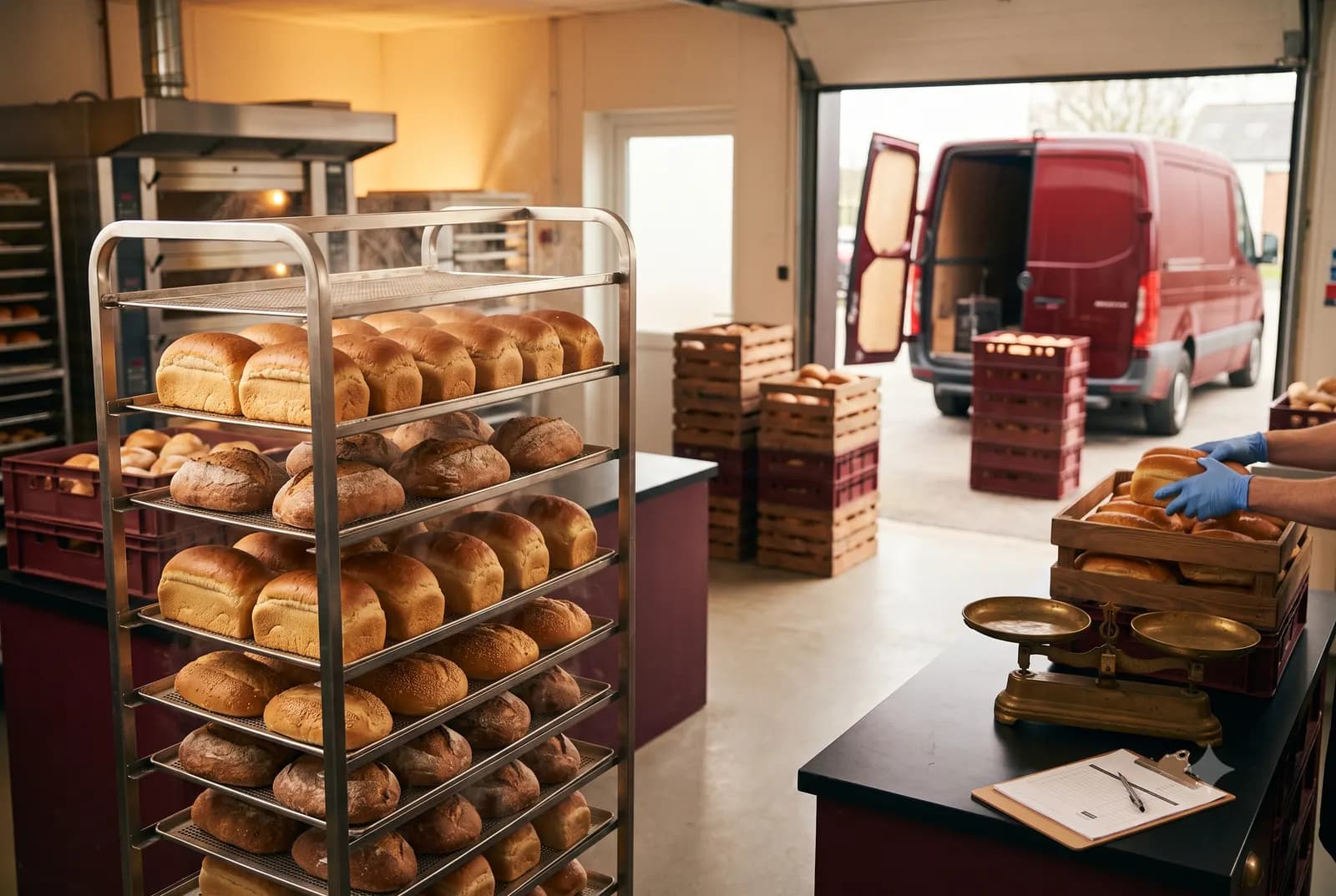
Mixed, proofed and baked the morning of (or the night before) delivery, with no frozen intermediate stage. This is the model that most closely matches what "fresh" implies.
Par-baked and finished on-site or at a central kitchen
Partially baked, frozen, then finished in an oven closer to delivery or service — common for specialty or low-volume formats.
Fully baked and frozen, then thawed before delivery
Baked well in advance, frozen for storage, thawed prior to dispatch. All three can reasonably be described as "fresh" in a sales conversation, but they behave very differently on a bread basket or a burger.
Comparing the Three Models at a Glance
| Production Model | Frozen Stage? | Shelf Life at Service | Best Use Case |
|---|---|---|---|
| Same-day baked from raw dough | None | Longest — crumb holds up through a full service | High-volume daily staples: sandwich bread, standard burger buns, dinner rolls |
| Par-baked, finished on-site | Yes, partial | Moderate — good if finished close to service | Specialty or low-volume formats, artisan breads baked in small batches |
| Fully baked and frozen, then thawed | Yes, full | Shortest — staling resumes quickly after thawing | Backup stock, demand spikes, items with genuinely long shelf life needs |
Why the Distinction Shows Up on the Plate
Freezing dough or baked bread changes the starch structure through a process called starch retrogradation, where starch molecules re-crystallise as the bread cools, squeezing out moisture and stiffening the crumb. Thawing doesn't fully reverse this. The practical result is a crumb that dries out faster and a shelf life at the point of service that's shorter than same-day baked product — even though the "best before" date on the packaging might look identical. For a hotel bread basket served at the start of a meal, or a burger bun that needs to hold up through a 30-minute delivery window, this difference is very noticeable to a guest, even if they can't articulate why.
Where Frozen or Par-Baked Genuinely Makes Sense
This isn't an argument that frozen product is universally worse — it has legitimate uses. Par-baked specialty items with a long shelf life, low-volume artisan formats that would be wasteful to bake fresh daily, or backup stock for demand spikes are all reasonable cases for a frozen or par-baked supply chain. The issue is when a supplier uses frozen stock for high-volume daily staples — sandwich bread, standard burger buns, dinner rolls — without disclosing it, because that's exactly the category where same-day baking makes the most perceptible difference.
Questions Worth Asking Your Supplier Directly
- For your standard sandwich bread and burger buns, is any part of the process frozen dough or par-baked stock?
- What time does production start relative to my delivery window?
- How long does finished product sit in a warehouse or on a delivery vehicle before it reaches my kitchen?
- If I switched to a same-day baked supplier, what change in shelf life should I expect at the point of service?
A supplier confident in their process will answer specifically. Vague answers about "always fresh" without specifics on timing are worth pressing on — and it's a fair follow-up question if you've already read our list of signs a bakery supplier is costing you customers.
How to Verify What You're Actually Getting
Don't rely on the sales conversation alone — a short verification process settles the question quickly:
- Ask for a facility visit or video walkthrough timed to your actual delivery window, so you can see whether product is coming out of an oven or a freezer.
- Compare crumb texture at two points in the day — mid-morning and end of service — on the same batch. Same-day baked bread holds its texture noticeably longer.
- Request the production schedule in writing as part of the supply agreement, not just a verbal assurance, so any drift is a contract issue rather than a disagreement about what was promised.
- Run a side-by-side trial with your current supplier's product and a same-day baked sample from a prospective supplier, tasted at the actual time of guest service rather than immediately after delivery.
What This Means for Hotel and Restaurant Procurement
If your bread and bun programme is a meaningful part of the guest experience — a hotel breakfast bread basket, a burger chain's signature bun, a café's daily sandwich line — the production model behind "fresh" matters more than the word itself. It's worth asking suppliers to walk through their actual production timeline rather than accepting the marketing description, and worth treating a same-day, no-frozen-dough process as a genuine differentiator rather than a nice-to-have.
Conclusion
"Fresh" is only useful as a word once you know which of the three production models it's describing. Same-day baked, no frozen intermediate stage, is the standard worth asking for on any high-volume daily staple — and it's a standard a supplier confident in their process will be happy to demonstrate rather than just claim.
JBR International bakes sandwich bread, burger buns, artisan loaves and dinner rolls fresh every morning from our Sector 5 facility in Gurugram — no frozen dough, no pre-baked inventory — for 100+ restaurants and hotels across Delhi-NCR. See our full bread and bun range or talk to us about a daily supply contract.
Frequently Asked Questions
Is frozen bread worse than fresh bread?
Not universally — frozen and par-baked processes are reasonable for low-volume specialty formats or backup stock. The problem is when a supplier uses frozen stock for high-volume daily staples like sandwich bread or standard burger buns without disclosing it, since that's exactly where same-day baking makes the most noticeable difference.
Why does frozen bread go stale faster?
Freezing and thawing accelerates starch retrogradation — the process where starch molecules re-crystallise and squeeze out moisture as bread cools. Thawing doesn't fully reverse this, so previously frozen bread typically has a shorter shelf life at the point of service than same-day baked bread, even if the packaging date looks similar.
How can I tell if my supplier is using frozen dough?
Ask directly what time production starts relative to your delivery window and whether any part of the process involves a frozen or par-baked intermediate stage. A same-day supplier will give a specific production timeline; a supplier using frozen stock will often answer vaguely or redirect to a general "always fresh" claim.
Does fresh-baked bread cost more than frozen or par-baked bread?
Same-day baked bread can cost somewhat more than par-baked or frozen alternatives because it requires daily production capacity rather than batch production for storage. For guest-facing items like a hotel bread basket or a signature burger bun, most F&B operators find the difference in guest experience justifies the cost gap.

About the Author
Birbal Singh · Founder
Birbal founded JBR International Ventures Private Limited with a vision to bring world-class bakery solutions to India, and holds a post-graduate degree in International Business.