How to Source Private-Label Bread in Gurgaon: A Practical Guide for Cloud Kitchens and Retail Brands
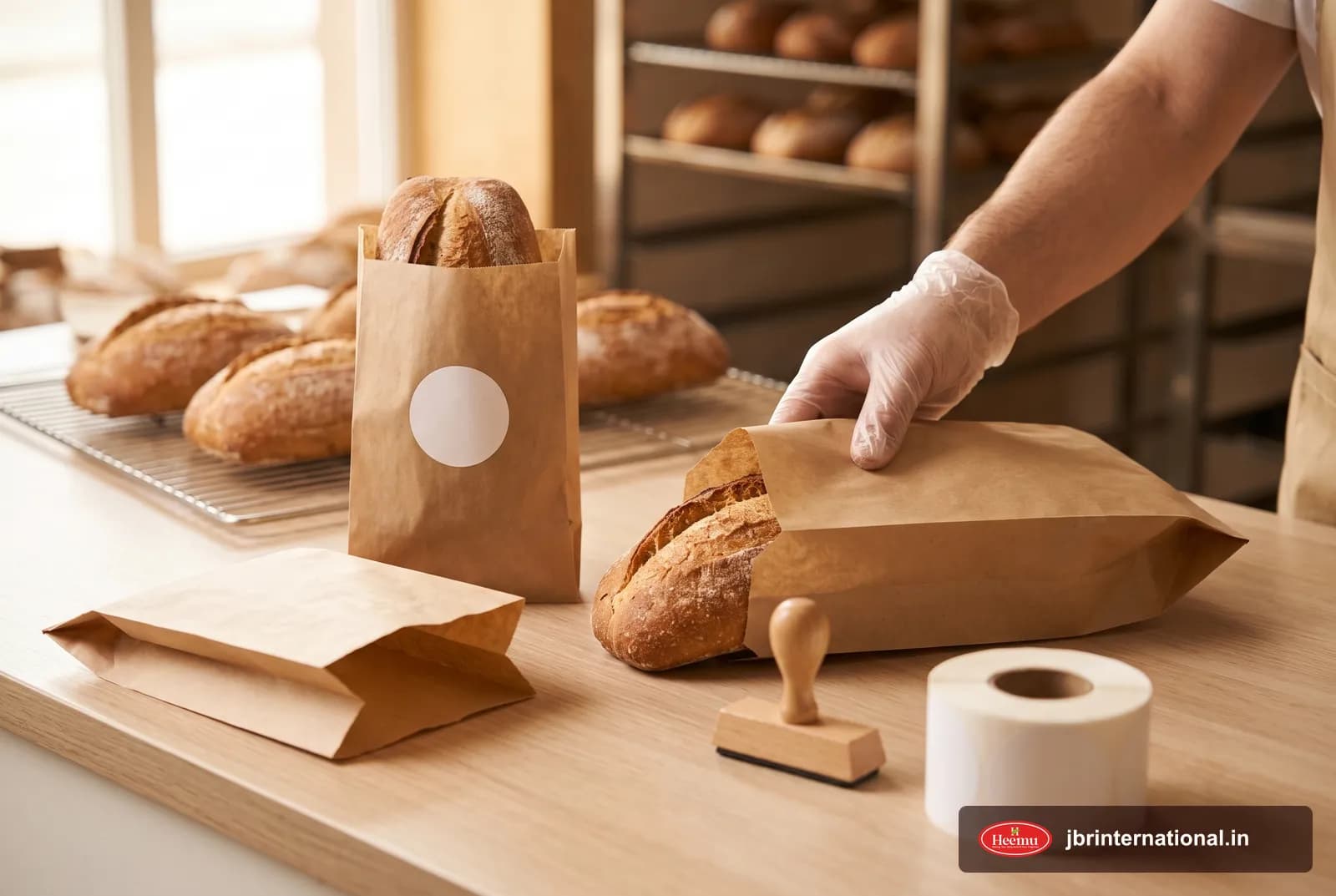
Launching a bread brand, or putting your cloud kitchen's name on a burger bun, doesn't require building a bakery. It requires finding a manufacturer willing to run your recipe, in your packaging, at a volume you can actually sell through — which is exactly what private-label bread manufacturing is built for. It's a well-established model in Gurgaon's B2B bakery market, but most first-time buyers go in without knowing what to actually ask, what the real minimum order size looks like, or how long recipe development genuinely takes. This guide covers all three, plus what separates a manufacturer set up to do this properly from one that's just saying yes to close a sale.
What "Private Label" Actually Means Here
Private-label bread manufacturing means a bakery produces bread to your specifications and supplies the finished product under your brand — your name on the packaging, your recipe (or a recipe developed to your spec), your customer relationship. The manufacturer isn't a co-brand or a visible partner; from the customer's side, it's your product. This is different from white-label, where a manufacturer's existing standard product gets your label applied with little to no recipe customisation — white-label is faster and cheaper to set up, private-label gives you more control over the actual product but takes longer to get right.
Who Actually Uses This Model
Private-label bread manufacturing isn't just for large retail chains — it's genuinely accessible to small operators, and that accessibility is the whole point of the model:
- Cloud kitchen and virtual restaurant brands wanting a branded burger bun or bread that matches their menu identity without owning kitchen equipment for it.
- D2C and retail bakery brands launching a packaged bread line for grocery or online sale without capital investment in ovens, proofers and mixers.
- Café and restaurant chains standardising a signature bread across multiple outlets, where consistency matters more than any single location's baking capability.
- Hotels and hospitality groups wanting a branded bread basket or breakfast item that reinforces their own identity rather than a generic supplier's.
What the Process Actually Looks Like
1. Specification and Recipe Brief
You bring the idea — a flavour profile, a dietary requirement (eggless is standard for most Indian B2B private-label work), a texture you're after, a size and shape. A serious manufacturer will ask detailed questions here rather than nodding along; vague specs lead to vague first samples.
2. Recipe Development — Expect Multiple Rounds
This is the step most first-time buyers underestimate. Getting a recipe genuinely right — the crumb texture, the crust, the shelf life, the fibre or protein profile if that's part of your positioning — typically takes two to four rounds of sample batches and feedback, not one. A manufacturer that hands you a "final" recipe after a single sample either got lucky or isn't being thorough. Budget several weeks for this phase, not days, if you want a product you're genuinely happy putting your name on.
3. Packaging and Labelling
Once the recipe is locked, packaging comes next — your branding, your compliance labelling (FSSAI-mandated details still apply even though it's manufactured by someone else), and your specified pack sizes. This is usually the fastest phase if your artwork and packaging supplier are already sorted; it becomes the bottleneck if they're not.
4. Production Run and Ongoing Supply
Once everything's approved, production moves to your agreed schedule — typically your MOQ per SKU, repeated on whatever delivery cadence your business needs. This is where a manufacturer's actual production discipline matters: the fifth production run needs to taste and look like the first one, not drift because a different shift baked it.
MOQ: The Number That Actually Constrains Your Launch
Standard bulk B2B bread supply can start as low as 10 loaves or 20 bun units per delivery — but private-label and custom-recipe manufacturing is a different commitment, because the manufacturer is setting aside a dedicated production run specifically for your brand and recipe rather than pulling from a standard batch. A realistic minimum for a private-label SKU is 100–200 units per production run. This is the number to plan your launch volume around before you commit to packaging design or a launch date — not after.
Quick Reference: Private-Label vs. Standard Bulk Supply
| Standard Bulk Supply | Private-Label Manufacturing | |
|---|---|---|
| Typical minimum order | 10 loaves / 20 buns | 100–200 units per SKU |
| Recipe | Manufacturer's existing catalogue | Custom to your spec, multi-round development |
| Packaging | Generic or manufacturer's own | Your branding, your labelling |
| Timeline to first order | Same week | Several weeks (recipe development + packaging) |
| Best fit for | Restaurants, hotels, cafés buying to use in-house | Brands selling the bread itself under their own name |
Questions Worth Asking Before You Commit
- How many recipe iterations are included before I'm charged for further sample rounds? Get this in writing — open-ended "as many as it takes" claims sometimes have an unstated limit.
- What happens to production consistency after the recipe is locked? Ask about their QC process between batches — the same question that matters for choosing any bulk bread supplier applies even more here, since your brand name is on the result.
- Is the manufacturer actually a manufacturer, or a reseller taking your private-label order and subcontracting it? Our post on bread manufacturer vs. bread supplier covers exactly how to find this out — it matters more for private label than any other order type, since recipe IP and production accountability both sit with whoever's actually running the ovens.
- What FSSAI and compliance documentation do they provide for a private-label product? Your brand carries the liability on the packaging even though someone else baked it — see our FSSAI license checklist for what to verify before signing.
Conclusion
Private-label bread manufacturing is a genuinely accessible way to launch a bread or bun brand without owning a bakery — but it rewards buyers who go in with realistic expectations on timeline and MOQ, and it punishes buyers who assume the first sample is the finished product. Budget for multiple recipe rounds, plan your launch volume around a 100–200 unit MOQ per SKU rather than a smaller bulk-supply number, and vet whether you're dealing with a genuine manufacturer before you hand over a recipe you've spent weeks developing.
JBR International manufactures private-label bread for cloud kitchen brands, D2C bakery labels, café chains and hotels across Gurugram and Delhi-NCR — full recipe development, FSSAI and ISO certified production, and custom packaging from our Sector 5 facility. Get in touch to discuss your brand, or see our bread manufacturer capabilities in full.
Frequently Asked Questions
What is private-label bread manufacturing?
Private-label bread manufacturing is when a bakery produces bread to your specifications — recipe, size, shape and packaging — and supplies the finished product under your brand name rather than theirs. You own the brand and the customer relationship; the manufacturer handles production, compliance and day-to-day baking.
What is the minimum order quantity for private-label bread in Gurgaon?
Standard B2B bulk supply typically starts from 10 loaves or 20 bun units per delivery, but private-label and custom-recipe manufacturing runs usually require a higher minimum — commonly 100–200 units per SKU — since a dedicated production run is being set aside specifically for your brand and recipe.
How long does it take to develop a custom recipe for a private-label bread brand?
Recipe development is rarely one-and-done. A realistic timeline involves two to four rounds of sample batches and feedback before the texture, flavour and shelf-life profile match what you're after — expect several weeks from first conversation to a recipe you're ready to launch with, not days.
Can a small cloud kitchen brand use private-label bread manufacturing, or is it only for large retailers?
It's genuinely accessible to small brands — that's the point of the model. A cloud kitchen or D2C brand that can't justify the capital cost of its own bakery equipment can still launch with a fully custom recipe and branded packaging, because the manufacturer already owns the production infrastructure. The MOQ is the real constraint to plan around, not brand size.

About the Author
Birbal Singh · Founder
Birbal founded JBR International Ventures Private Limited with a vision to bring world-class bakery solutions to India, and holds a post-graduate degree in International Business.