Wholesale Bread Pricing in Gurgaon: What B2B Buyers Should Expect to Pay
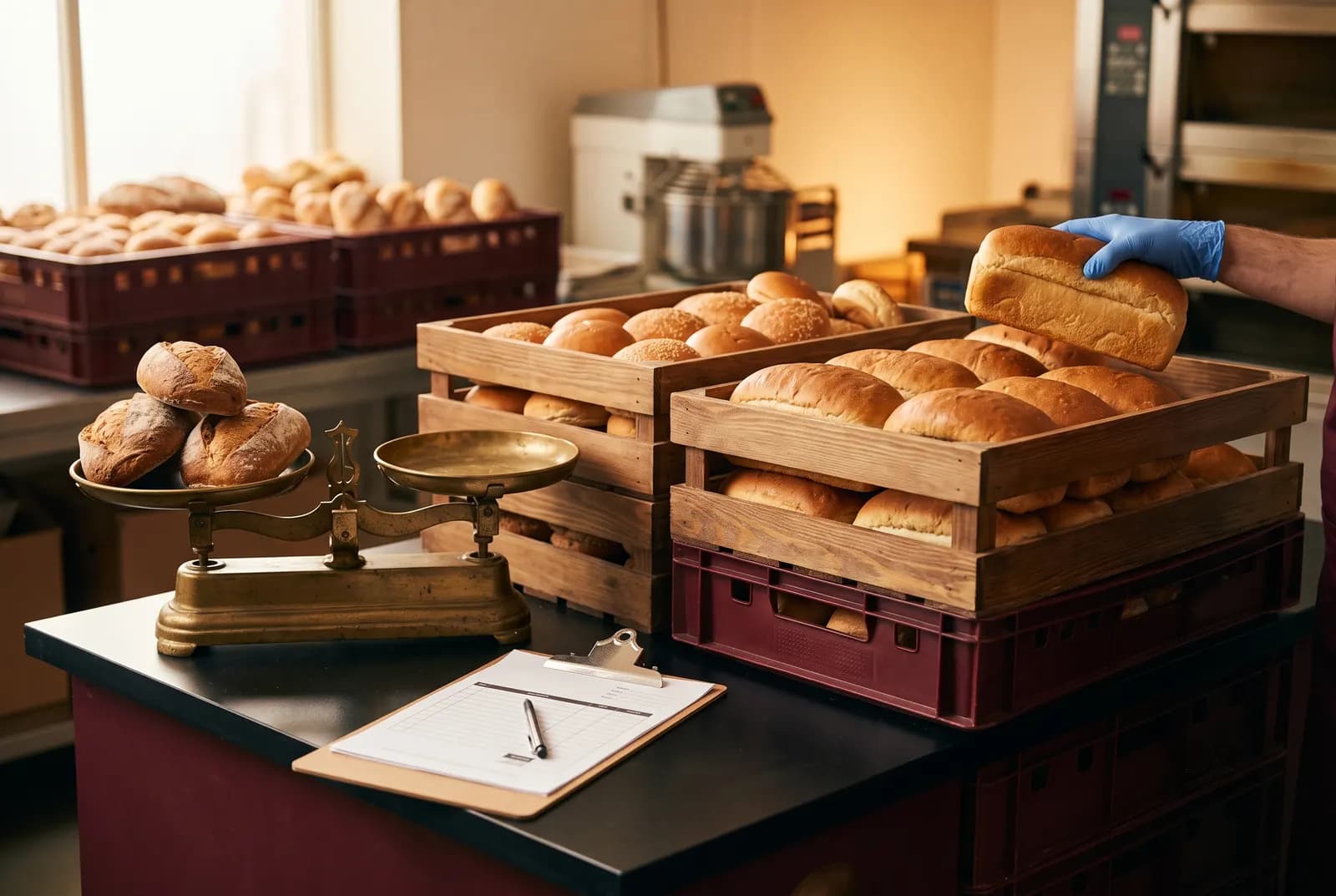
If you've spent any time trying to get a straight answer on what bulk bread should cost in Gurgaon, you've probably noticed most suppliers won't quote a number until they know your volume — and directory listings on JustDial or IndiaMART give you a price range with no context on what specification it applies to. That's not evasiveness; wholesale bread pricing genuinely depends on enough variables that a single flat number is close to meaningless. This guide breaks down what actually moves the price, gives you real benchmark ranges to sanity-check a quote against, and covers the questions worth asking before you commit to a supplier based on their headline number alone.
Why There's No Single "Wholesale Bread Price" in Gurgaon
A retail shopper buying one loaf sees one price. A restaurant, hotel or cloud kitchen ordering 200 loaves a day is buying something closer to a service contract — production capacity, a delivery schedule, and a specification — and each of those three things independently moves the price. This is exactly why the bulk bread listings on B2B marketplaces like IndiaMART show such a wide spread even for what looks like the same product: a ₹15 sandwich bread listing and a ₹28 sandwich bread listing might both be accurate, just for different specs, volumes and delivery terms.
The Five Things That Actually Determine Your Quote
1. Order Volume
This is the single biggest lever. Most B2B bakeries set volume tiers rather than a flat per-unit rate — expect a noticeably better price once your daily order crosses roughly 100–150 units of a given item, and better again past 300–500 units, since fixed costs (oven time, delivery route, packaging setup) spread across more units. If a supplier quotes you one flat number regardless of whether you're ordering 20 loaves or 400, ask why — it usually means their pricing isn't actually volume-optimised, which can mean you're overpaying at higher volumes.
2. Product Specification
A standard 400g white sandwich loaf and an eggless whole-wheat loaf at the same weight are not the same production cost — different flour, different proofing time, often smaller batch runs for specialty specs. A custom gram weight (a bun cut to an exact size for your specific burger, for instance) can also carry a small premium versus a supplier's standard catalogue weight, though a good B2B supplier shouldn't charge extra just for standard customisation — see our note on this in choosing a bulk bread supplier.
3. Delivery Frequency and Distance
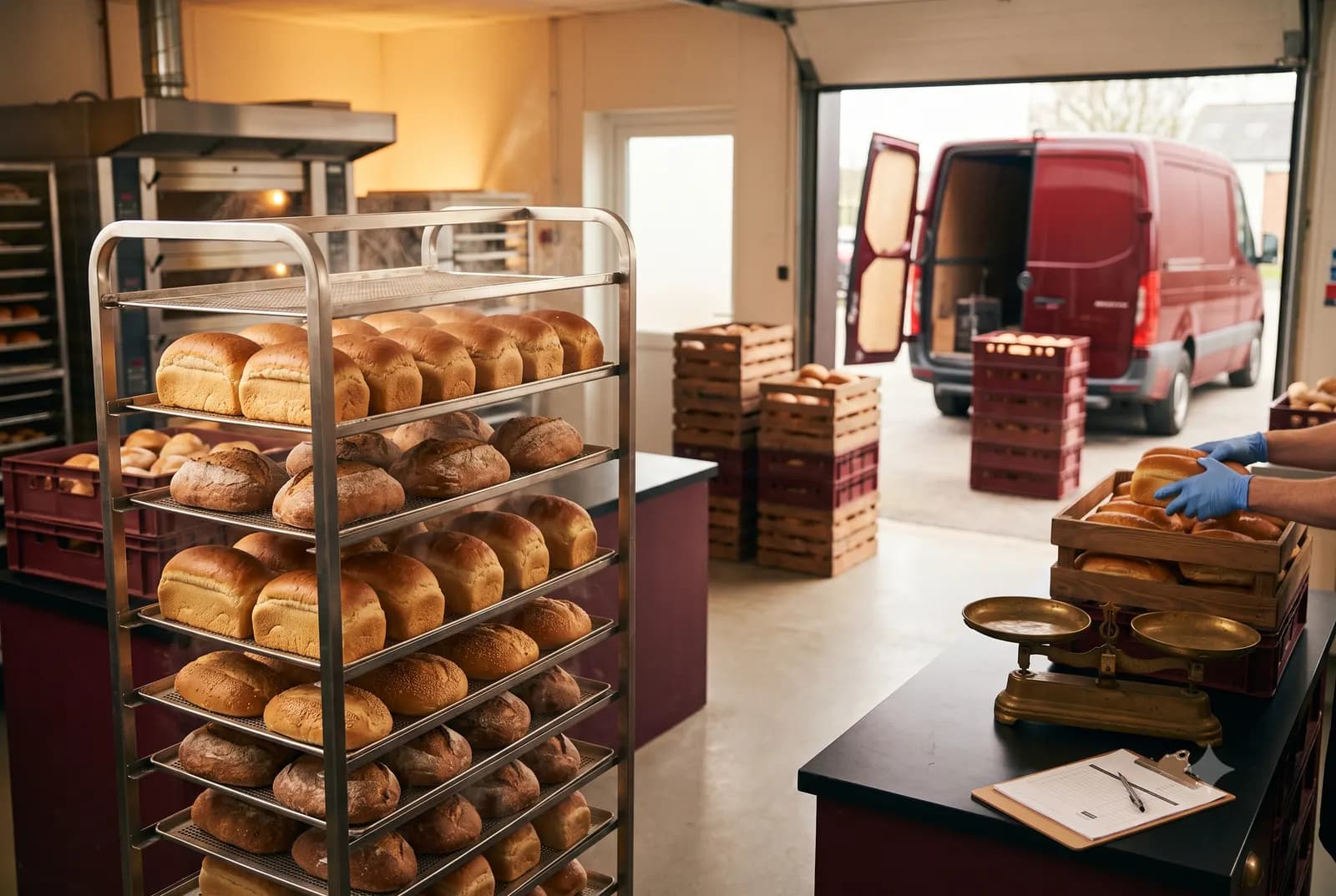
Daily delivery to a single Gurgaon location costs a supplier less per unit to serve than twice-daily delivery, or delivery split across multiple outlet addresses. If you're running a multi-outlet cloud kitchen brand or a chain with several Gurgaon locations, ask whether consolidated delivery to one hub versus separate delivery to each outlet changes your rate — it often does, in your favour, if you can receive centrally.
4. Packaging Requirements
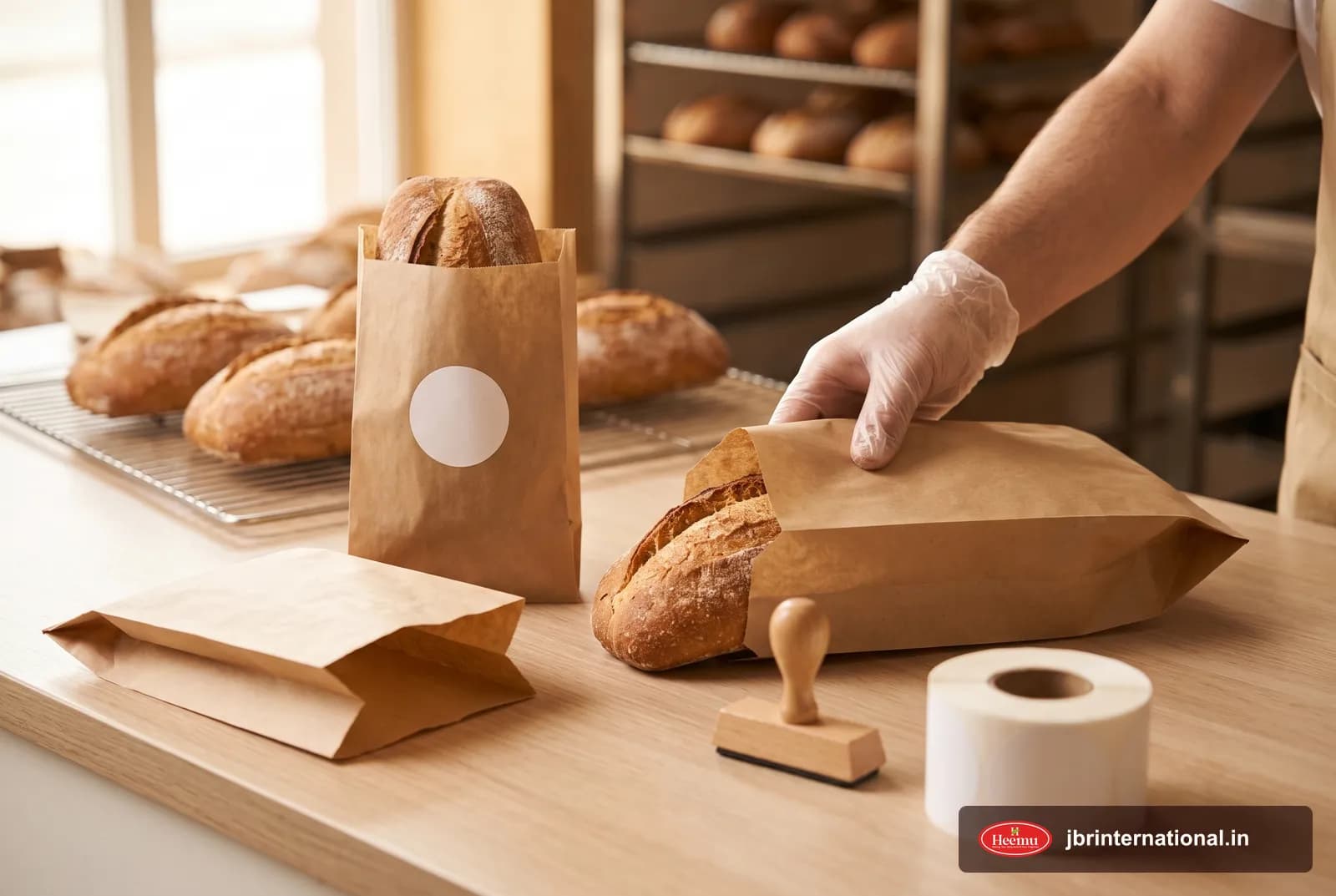
Bulk bread in simple polybags for a restaurant kitchen costs less to package than the same bread in individually labelled, sealed retail-style packaging for a tuck shop or retail shelf. If your use case needs shelf-ready packaging rather than kitchen-use bulk packs, expect that reflected in the quote.
5. Payment Terms
Upfront or on-delivery payment is generally priced more favourably than a 30- or 45-day credit cycle, since extending credit carries a real cost for the supplier. This is a normal, negotiable line item — not a hidden fee — but it's worth asking about explicitly rather than assuming your preferred payment terms are already baked into a quoted rate.
Benchmark Ranges: What to Expect Before You Get a Quote
Use this table as a sanity check against any quote you receive — not as a price list, since your actual number depends on the five factors above.
| Product | Typical B2B Bulk Range (per unit) | Main Price Driver |
|---|---|---|
| Standard sandwich bread (400g) | ₹18–₹28 | Volume tier + eggless/whole-wheat spec |
| Burger buns | ₹6–₹12 | Size/gram weight + volume |
| Dinner rolls (per piece, bulk pack) | ₹4–₹8 | Volume + packaging format |
| Artisan/sourdough loaves | ₹80–₹150 | Fermentation time, lower batch volume |
| Pav (per piece, bulk pack) | ₹3–₹6 | Volume tier |
If a quote comes in well below this range for a genuinely bulk, daily-delivery order, it's worth checking whether that price reflects same-day baking or a frozen/par-baked process — see our breakdown of fresh vs. frozen bread for why that distinction affects both cost and quality. A price that looks too good against these benchmarks is usually cutting a corner somewhere in production, not offering unusually good efficiency.
Retail-Shelf Price vs. B2B Bulk Price — Why They're Not Comparable
It's tempting to compare a wholesale quote against what the same bread costs on a supermarket shelf, but the two aren't measuring the same thing. Shelf pricing bakes in a retailer's margin, individual retail packaging, and an allowance for unsold stock the retailer will eventually write off. A direct-to-kitchen B2B order skips all three of those costs, which is why a genuinely bulk quote should land meaningfully below shelf price — if it doesn't, you're likely being quoted retail-adjacent pricing rather than a real wholesale rate. This is also the core reason a dedicated B2B supplier tends to beat retail sourcing for anything beyond an occasional small order, a comparison we cover in more depth in retail bakery chain vs. dedicated B2B bulk supplier.
Questions to Ask Before You Compare Two Quotes
Two quotes that look different on paper are often not comparable at all until you ask:
- Is this price for same-day baked bread, or does it include any frozen/par-baked stock?
- What's the volume breakpoint where the per-unit price improves — and does my order size qualify?
- Does this include delivery, or is delivery costed separately?
- What packaging format is included at this price?
- Does the price change with payment terms, and if so, by how much?
A supplier who answers all five specifically, without redirecting to a vague "it depends," is generally quoting you a real number rather than a placeholder to get the conversation started.
Conclusion
Wholesale bread pricing in Gurgaon isn't opaque by accident — it genuinely depends on volume, spec, delivery logistics, packaging and payment terms, which is exactly why directory listings show such a wide spread. Use the benchmark ranges above to sanity-check any quote, and use the five questions to make sure you're comparing two suppliers on the same basis rather than two different products wearing the same price tag. If you're still narrowing down which supplier to trust with the number once you have it, our guide to choosing a bulk bread supplier in Gurgaon covers the reliability side of that decision.
JBR International supplies wholesale bread to restaurants, hotels, cafés, cloud kitchens and retailers across Gurugram and Delhi-NCR, with transparent volume-tier pricing and no premium for standard custom specs. Get in touch for a quote based on your actual order volume, or see our full bread and bakery product range first.
Frequently Asked Questions
What is the average wholesale price of bread in Gurgaon?
As a rough B2B range: standard sandwich bread runs roughly ₹18–₹28 per 400g loaf, burger buns ₹6–₹12 per piece, and artisan or sourdough loaves ₹80–₹150 per loaf, all before volume discounts. These are directional ranges, not a quote — actual pricing depends on your specific volume, specs and delivery frequency, so treat this as a benchmark to sanity-check a supplier's quote against, not a price to expect verbatim.
Why is bulk bread pricing lower than retail shelf pricing?
Retail shelf pricing includes a retailer's margin, individual packaging designed for shelf display, and the cost of unsold stock (shrinkage) that the retailer prices in. A B2B bulk order skips all three — it ships in bulk packaging directly to your kitchen with no retail markup layered on top, which is why direct-to-kitchen bulk pricing is typically meaningfully below what the same bread costs on a supermarket shelf.
Does order volume affect per-unit bread pricing?
Significantly. Most B2B bakeries in Gurgaon set volume tiers, with per-unit pricing improving noticeably once daily orders cross roughly 100–150 units, and improving again past 300–500 units, since fixed production and delivery-route costs get spread across more units. It's worth asking a supplier for their specific volume breakpoints rather than assuming a single flat rate applies at any order size.
What factors besides volume affect wholesale bread pricing?
Five factors move the number most: order volume, product specification (standard vs. eggless, whole wheat, or a custom gram weight), delivery frequency and distance, packaging requirements, and payment terms (upfront vs. credit-cycle invoicing). Two kitchens ordering the same volume can get meaningfully different quotes based on these five factors alone.

About the Author
Sanjeev Grover · Finance Head
Sanjeev oversees financial planning and strategic growth at JBR International Ventures Private Limited, with over 20 years of experience in finance.