Bread Manufacturer vs. Bread Supplier: What's the Difference and Which Do You Need?
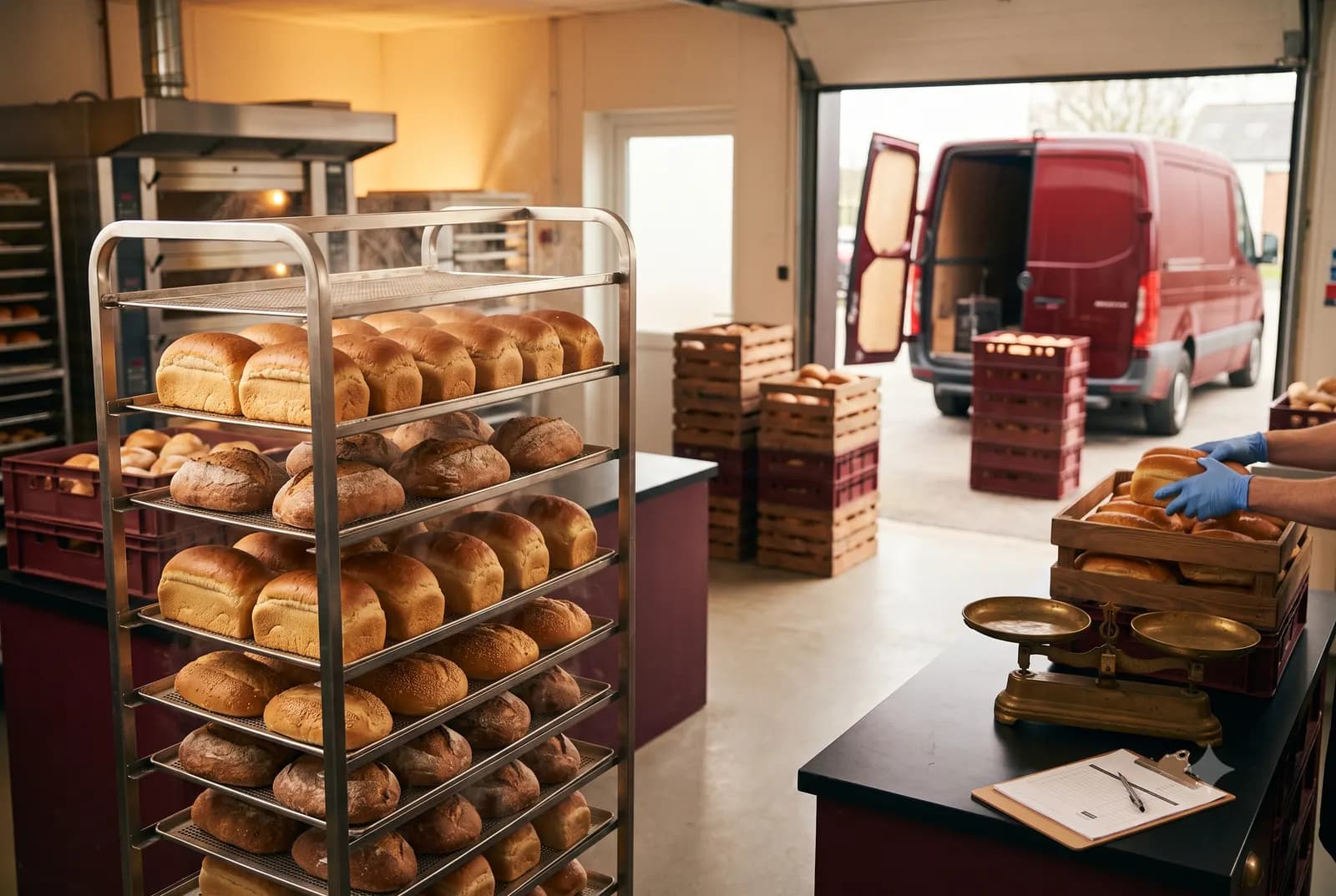
"Bread manufacturer," "bread supplier" and "bread wholesaler" get used almost interchangeably in casual conversation and in most directory listings, but they describe genuinely different points in a supply chain — and which one you're actually talking to changes your pricing, your freshness guarantee, and who's accountable when something goes wrong. This isn't just semantics: a restaurant that thinks it's buying direct from a manufacturer, when it's actually one step removed through a distributor, is paying for a markup it doesn't need to and adding a layer of handling between production and its kitchen. Here's what each term actually means, how the supply chain typically works for bread in Gurgaon specifically, and which one your business should actually be searching for.
The Textbook Definitions
In a general B2B supply chain, the roles break down like this:
- Manufacturer — produces the goods. For bread, this means owning or operating the production facility: mixers, proofers, ovens, and the staff and process that turn flour into finished bread.
- Supplier — the entity that gets goods to a buyer. A supplier is sometimes the manufacturer selling direct, and sometimes a separate business that buys from the manufacturer and resells.
- Distributor/Wholesaler — buys in bulk from a manufacturer, stores it, and breaks it down into smaller orders for multiple buyers, typically adding a margin for that logistics service.
The textbook chain runs manufacturer → distributor → wholesaler → retailer → customer, with each step adding a small margin. But that full chain is built for products that need wide, indirect distribution — packaged snacks reaching thousands of retail shelves, for instance. Fresh bread doesn't work that way.
Why Bread Specifically Doesn't Follow the Textbook Chain
Bread has a short shelf life and needs to move from oven to kitchen fast — every extra handoff in the chain adds time between baking and delivery, which is exactly the freshness gap that matters most for a restaurant kitchen or hotel breakfast service. Because of this, Gurgaon's B2B bread market is dominated by manufacturers who also handle supply directly, skipping the distributor layer entirely. This is different from, say, packaged biscuits or long-shelf-life snacks, where a multi-step distribution chain makes practical sense. For bread specifically, "manufacturer" and "supplier" collapsing into the same business isn't an exception — it's close to the norm for any bakery serious about daily fresh production.
So Which Term Should You Actually Search For?
If you're a restaurant, hotel, café or cloud kitchen sourcing daily bread, you don't need a distributor or wholesaler layer at all — you want a manufacturer that supplies direct. In practice this means:
- Searching "bread manufacturer Gurgaon" and "bread supplier Gurgaon" should mostly surface the same businesses, since the better ones do both.
- If a result is clearly a pure distributor (buying from someone else's factory and reselling), you're paying for an extra margin you don't need, and losing a step of freshness in the process.
- The real question to ask a prospective vendor isn't "are you a manufacturer or a supplier" — it's "do you bake it yourself, or source it from someone else and resell it?"
Quick Reference: What Each Model Means for Your Kitchen
| Model | Who You're Actually Buying From | Typical Impact on Price | Typical Impact on Freshness |
|---|---|---|---|
| Manufacturer selling direct | The business that bakes it | No middleman margin | Shortest gap between oven and delivery |
| Manufacturer → their own distribution arm | Same company, separate delivery function | Usually still no extra margin | Similar to direct, if same-day dispatch |
| Independent distributor/wholesaler | A reseller buying from a manufacturer | Distributor margin added | Extra handling/storage step before it reaches you |
| Retail bakery chain (bulk order) | A retail-first business, bulk as a side offering | Often close to shelf pricing | Varies — check their production schedule |
Where a Distributor or Wholesaler Does Make Sense
This isn't to say the wholesaler model is always wrong — it has a real place. If you're a small kirana store or tuck shop ordering irregular, low volumes of multiple bread brands, a wholesaler aggregating stock from several manufacturers can offer more variety and flexibility than dealing with five separate manufacturers' minimum order quantities individually. Our page on bread wholesaling in Gurgaon covers this trade-facing model specifically — it's a genuinely different buyer profile from a restaurant kitchen sourcing its own daily bread.
What to Ask a Prospective Vendor to Find Out Which One They Are
- "Where is your production facility, and can I visit it?" A genuine manufacturer will answer immediately with an address; a pure reseller will often be vague or redirect the question.
- "What time does your production run relative to my delivery window?" This only makes sense as a question to a manufacturer — a distributor doesn't control production timing.
- "Is your FSSAI license a manufacturing license or a trading/wholesale license?" These are different license categories, and the answer tells you plainly which side of the chain you're dealing with. Our FSSAI license checklist covers how to verify this.
- "If I have a quality issue, who's accountable — you, or your manufacturer?" A direct manufacturer-supplier has one answer: they are. A distributor may need to escalate to their own upstream supplier, adding a delay to resolution.
Conclusion
For daily bread supply to a restaurant, hotel, café or cloud kitchen, the distinction that actually matters isn't "manufacturer" vs. "supplier" as separate categories to choose between — it's confirming whether the business in front of you does both, or whether you're one step removed through a reseller. In Gurgaon's B2B bread market, the better-established players collapse both roles into one, and that's the model worth searching for and vetting against, using the questions above rather than the label on their listing. Once you've confirmed you're talking to a genuine manufacturer-supplier, our guide to choosing a bulk bread supplier in Gurgaon covers the rest of the vetting checklist — delivery record, consistency, and account support.
JBR International is both the manufacturer and the direct supplier for every loaf, bun and roll we produce — no distributor layer, no resold stock — serving restaurants, hotels, cafés and cloud kitchens across Gurugram and Delhi-NCR from our own Sector 5 production facility. Get in touch to arrange a facility visit or a trial delivery.
Frequently Asked Questions
What's the difference between a bread manufacturer and a bread supplier?
A bread manufacturer is the entity that actually bakes the bread — they own or run the production facility. A bread supplier is whoever gets that bread to your kitchen; sometimes that's the manufacturer selling direct, sometimes it's a separate distributor or wholesaler buying from a manufacturer and reselling to you. In practice, for most restaurants, hotels and cloud kitchens in Gurgaon, the two terms describe the same relationship — a manufacturer that also supplies direct — but it's worth confirming which one you're actually dealing with.
Should a restaurant buy directly from a bread manufacturer?
For any meaningful daily volume, yes — buying direct from a manufacturer that also handles supply removes a distribution layer, which usually means fresher product (no extra transfer/storage step) and better pricing, since there's no distributor margin stacked on top. The exception is very low, irregular volume, where a distributor aggregating from multiple manufacturers might offer more flexibility than a manufacturer's minimum order quantity allows.
Is a bread supplier more expensive than a manufacturer?
If the "supplier" is a distributor or wholesaler buying from a manufacturer and reselling, yes — there's an extra margin in the chain. If the "supplier" is the manufacturer itself selling direct (common in Gurgaon's B2B bakery market), there's no price difference, since manufacturer and supplier are the same entity in that case.
Can one company be both a bread manufacturer and a bread supplier?
Yes, and for B2B bread in Gurgaon this is actually the norm rather than the exception — most established bulk bread businesses in the city both produce the bread and deliver it directly to restaurants, hotels and cafés, without a separate distributor in between. This direct model is generally the better option for a buyer, since it removes a markup layer and puts quality control in one accountable party's hands.

About the Author
Sanjeev Grover · Finance Head
Sanjeev oversees financial planning and strategic growth at JBR International Ventures Private Limited, with over 20 years of experience in finance.